
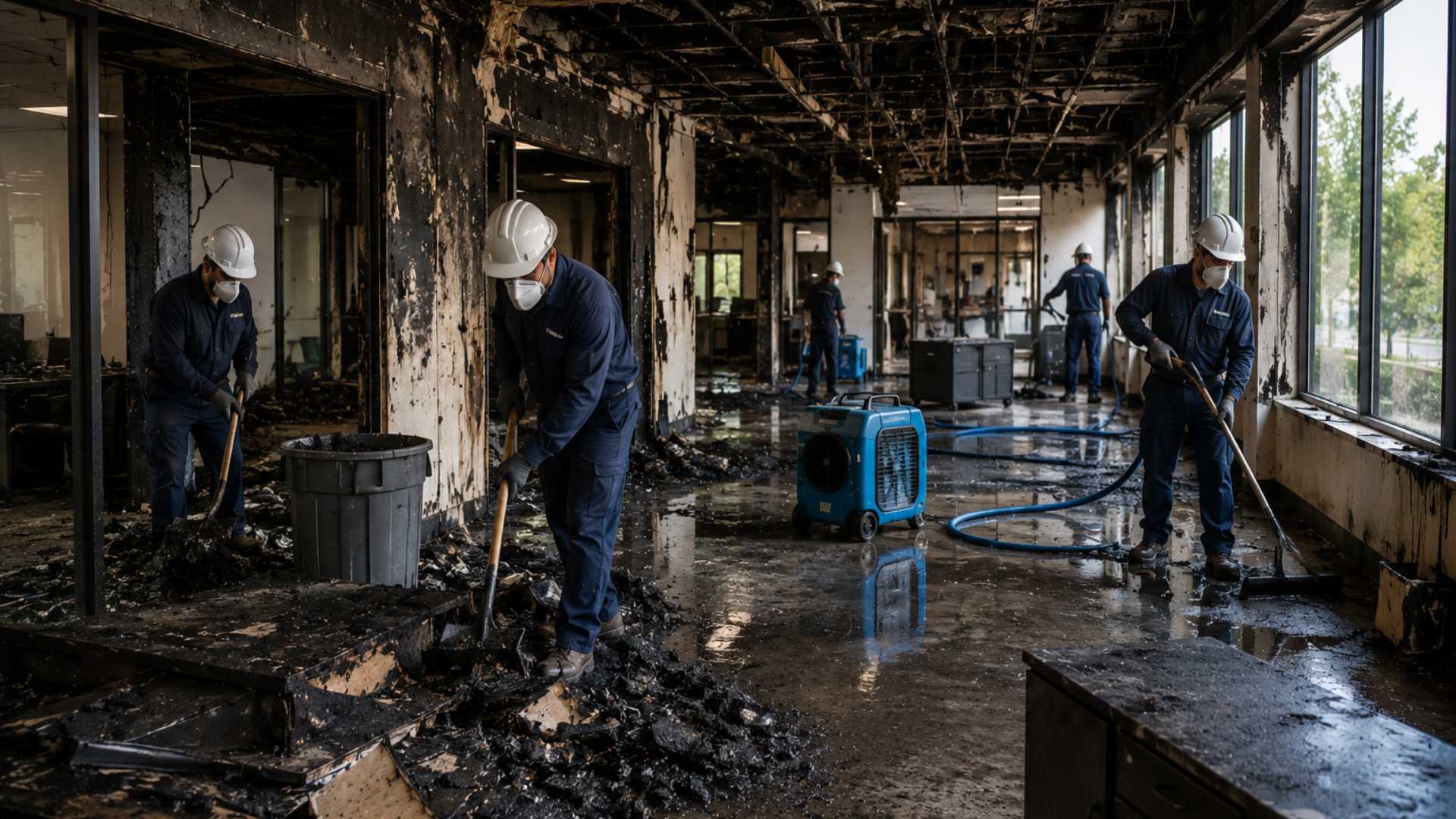
The moments after a commercial fire are chaotic. Even once the flames are extinguished, a business owner is left facing a building that may be unsafe, an operation that has ground to a halt, and a long list of urgent decisions with no obvious starting point.
The damage is rarely limited to what burned. Fire leaves behind smoke, soot, and lingering odor, while the water and chemicals used to suppress the blaze create their own set of problems throughout the structure.
Recovering from this kind of event is not something to approach piece by piece. It requires a structured restoration process that addresses safety, mitigation, cleanup, and reconstruction in the right order. Understanding what happens during professional fire damage cleanup helps owners act quickly and avoid costly missteps when it matters most.
Before any cleanup begins, the immediate priority is protecting people and preventing the situation from getting worse.
The first concern is always the people inside. Employees, customers, and tenants must be evacuated and accounted for, and no one should return until the property has been cleared by the fire department and qualified professionals. Fire weakened structures and lingering hazards make a building dangerous long after the visible flames are gone.
Once everyone is safe, the building itself needs protection. Broken windows, open roofs, and unlocked entry points leave a property vulnerable to weather, theft, and further damage. Temporary measures such as board up and tarping help secure the site until restoration can begin in full.
The sooner a professional restoration team is on the case, the better the outcome. A commercial focused crew can assess the damage, begin mitigation, and guide the owner through the steps ahead. Rebuilders Restoration provides 24/7 emergency response so help can be dispatched the moment a fire is contained.
A thorough assessment lays the foundation for everything that follows. It determines what is safe, what is salvageable, and what the recovery will require.
Fire compromises the materials that hold a building together. Trained technicians evaluate beams, walls, floors, and the roof to determine whether the structure is stable. This step protects the safety of everyone involved and shapes the restoration plan.
Beyond structural concerns, a fire scene can contain electrical hazards, weakened flooring, and air quality risks from smoke and chemical residue. Identifying these dangers early allows the team to work safely and protect occupants once they return.
Accurate documentation is essential for a smooth insurance claim. Detailed records of the damage, captured before cleanup alters the scene, give carriers the information they need and help the business recover its costs more quickly.
Many owners are surprised that water becomes a central problem after a fire. Addressing it early is critical.
Firefighting efforts introduce large volumes of water into a building. Sprinkler systems and fire hoses soak floors, walls, and contents, leaving moisture that can cause as much harm as the fire itself if it is not removed promptly.
Standing water is extracted right away using professional grade equipment. Removing it quickly prevents it from seeping deeper into building materials and limits the spread of damage across the facility. Prompt commercial water removal is one of the most important early steps after a fire.
Moisture left behind creates ideal conditions for mold, which can begin developing within a day or two. Structural drying and dehumidification pull hidden moisture out of materials, stopping mold before it becomes a secondary disaster.
Smoke and soot travel far beyond the area that burned, settling on surfaces and working into systems throughout the building.
Soot is acidic and can permanently stain or etch surfaces if it is not removed correctly. Technicians use specialized cleaning agents and methods matched to each material, from metal and glass to walls and fixtures, to lift residue without causing further harm.
Smoke and soot are easily drawn into heating and cooling systems, where they settle in ducts and components. Cleaning the HVAC system prevents contaminants from circulating back into the air once the building is reoccupied.
Smoke odor can linger in porous materials long after surfaces look clean. Professional deodorization neutralizes these odors at the source rather than masking them, restoring healthy, breathable air to the space.
Once cleanup is underway, the building must be cleared of materials that cannot be saved.
Charred drywall, ruined flooring, damaged insulation, and other unsalvageable materials are carefully removed and disposed of. Clearing this debris reveals the true condition of the structure beneath and prepares the site for repair.
Controlled demolition removes compromised sections in a deliberate, safe manner. This careful preparation ensures that reconstruction begins on a clean, stable foundation rather than building over hidden damage.
With the property cleaned and cleared, the focus shifts to rebuilding and returning the facility to working order.
Damaged framing, walls, roofing, and other structural elements are repaired or replaced to restore the integrity of the building. This stage rebuilds the bones of the property so it is safe and sound.
Interior reconstruction brings the space back to life, including drywall, paint, flooring, trim, and the mechanical systems that keep a building functional. The goal is to return the property to the condition it was in before the fire.
Before a business reopens, a final inspection confirms that every element of the work meets safety standards and quality expectations. This last check gives owners confidence that the building is truly ready for occupancy.
Even well intentioned owners can make decisions that worsen the situation. A few mistakes appear again and again.
Waiting to begin cleanup gives soot, smoke, and water more time to cause permanent damage. Acidic residue sets into surfaces and moisture invites mold, so hesitation almost always increases the eventual cost.
Returning to a fire damaged building too soon is dangerous. Weakened structures, hidden hot spots, and poor air quality pose serious risks, and only cleared, professionally evaluated spaces should be entered.
Because fire is the obvious threat, owners often overlook the water left behind by suppression efforts. Moisture trapped behind walls and beneath floors can quietly cause mold and deterioration if it is not located and removed.
Handling a commercial fire recovery without professional help puts the property, the budget, and the people inside at risk. Experienced teams deliver results that protect the business in the long run.
A professional crew coordinates every stage of the process and works with the urgency a commercial loss demands. That coordination shortens the path from disaster to reopening and helps the business get Back to Business™ sooner.
By acting quickly to remove water, neutralize soot, and dry the structure, professionals prevent the secondary problems that turn a contained fire into a building wide loss. Less spread means lower costs and a simpler rebuild.
A restoration partner documents the damage carefully and works alongside insurance carriers, which strengthens the claim and helps the process move forward. Rebuilders Restoration teams are experienced in coordinating with insurers to keep recovery on track.
A commercial fire is one of the most disruptive events a business can face, and the response in the first hours and days shapes everything that follows. Immediate action protects people, limits damage, and sets the stage for a faster, more complete recovery. From securing the property and removing water to cleaning soot, clearing debris, and rebuilding, each step builds on the one before it.
The most important decision an owner can make is to call qualified help right away. With 24/7 emergency response and a restoration process built for commercial properties, Rebuilders Restoration helps businesses move from chaos to recovery with clarity and speed.
Cleanup should begin as soon as the property is declared safe to enter. Soot becomes more corrosive and water encourages mold the longer they sit, so starting within the first hours or days greatly reduces permanent damage and overall cost.
Almost always. Sprinklers and fire hoses introduce significant water into a building, and that moisture must be extracted and dried to prevent mold and structural deterioration. Skipping this step often leads to a second wave of damage.
In most cases, yes. Professional deodorization neutralizes odor at its source rather than covering it, treating porous materials, ducts, and affected surfaces. Severe odors may require multiple treatments, but the goal is fully restored air quality.
It depends on the severity and the materials, but many items can be restored through professional cleaning and content restoration, including certain equipment, furniture, fixtures, and documents. A restoration team assesses each category and recommends what is worth saving.
Most commercial property policies cover fire damage restoration, though coverage details vary. Thorough documentation and a restoration partner who coordinates with your carrier help ensure the claim is processed smoothly and fairly.
A fire can bring your business operations to a sudden halt, but a fast response can make all the difference. Rebuilders Restoration provides prompt, professional fire damage restoration and smoke damage cleanup to help minimize downtime and restore your commercial property safely and efficiently.
Our experienced team is available to assess the damage, remove smoke and soot residue, eliminate lingering odors, and begin the recovery process as quickly as possible. Don't let fire damage keep your business closed any longer than necessary.
Contact Rebuilders Restoration today or call for immediate emergency assistance. We're ready 24/7 to help you recover, rebuild, and get your business back up and running with confidence.