
.jpg)
When a pipe bursts in an office or a flood hits a retail space, the immediate priority is protecting your assets and resuming operations. Commercial water remediation is the professional process of identifying, containing, and reversing water damage in a business environment to ensure the structural integrity of the building and the safety of its occupants. Most business owners face the daunting task of minimizing downtime while dealing with complex insurance requirements and potential mold growth. This guide breaks down the technical stages of cleanup and recovery to help you make informed decisions during a property crisis.
Commercial water remediation focuses specifically on the removal of pollutants and the cleaning of contaminated water to make a space habitable again. While restoration involves rebuilding physical structures like drywall or flooring, remediation is the critical sanitization and drying phase that prevents long term health hazards. In a business setting, this often involves specialized equipment to handle large square footage and high volume water extraction that standard residential tools cannot manage.
The commercial water remediation process is a multi stage operation that begins with a thorough inspection of the property to categorize the water source. Professionals must determine if the water is "clean" from a supply line or "black" from a sewage backup, as this dictates the safety protocols required for the cleanup. For businesses located near the Detroit River or in high density areas like the Financial District, rapid response is essential to prevent water from migrating into subflooring or elevator shafts.
The process begins with emergency water extraction using industrial strength submersible pumps and truck mounted vacuum units. Once the standing water is removed, technicians use moisture meters and infrared cameras to find hidden pockets of dampness behind walls and under carpets. This data allows the team to create a specialized drying plan tailored to the specific materials in your building, such as industrial carpeting or concrete slabs.
After extraction, the dehumidification phase utilizes LGR (Low Grain Refrigerant) dehumidifiers to pull moisture from the air and the building's structure. This prevents secondary damage like wood warping or metal corrosion, which are common in older buildings near the New Center area or historic brick structures in Corktown. Throughout this stage, technicians monitor the "dry standard" of the building to ensure every layer of the facility is returning to its baseline moisture level.
Maintaining safety during a crisis requires a direct line to experts who understand the urgency of your situation, which is why having a contact for professional support can significantly reduce the total cost of your recovery.
Commercial properties often suffer from water damage due to aging infrastructure, such as failing HVAC systems or pressurized fire sprinkler malfunctions. In large complexes like those found in Southfield or Troy, a single leak on an upper floor can cascade through several levels, affecting multiple tenants and high value electronics. Internal plumbing failures are statistically the most frequent cause of loss for office managers and facility directors.
External factors also play a significant role, particularly during heavy rain seasons or rapid snowmelts that overwhelm local drainage systems. For businesses situated near the Lodge Freeway or other low lying areas, surface water flooding can introduce silt and bacteria into the premises. Regular maintenance of roof drains and sump pumps is the best defense against these predictable environmental threats.
If you are currently experiencing a leak and need to assess the damage immediately, reaching out to a local specialist to contact our team will provide you with a rapid onsite evaluation of the structural risks.
Most commercial spaces require between three to five days to reach a complete dry standard, though this varies based on the class of water intrusion. A simple leak on a concrete floor might be resolved in 48 hours, while a major flood affecting porous materials like insulation and drywall will take longer. Factors such as the local humidity levels in the Great Lakes region can also influence the evaporation rate within the building.
The density of the materials and the airflow within the building are the primary drivers of the timeline. Large open warehouses near the Eastern Market may dry faster than partitioned office spaces in a downtown high rise due to better natural ventilation and fewer hidden cavities. Specialized "inter-air" drying systems can sometimes speed up the process by injecting warm air directly into wall voids without removing the drywall.
Timing is critical to prevent the onset of mold, and establishing a professional contact early in the process ensures that high powered drying equipment is deployed within the first 24 hours of the incident.
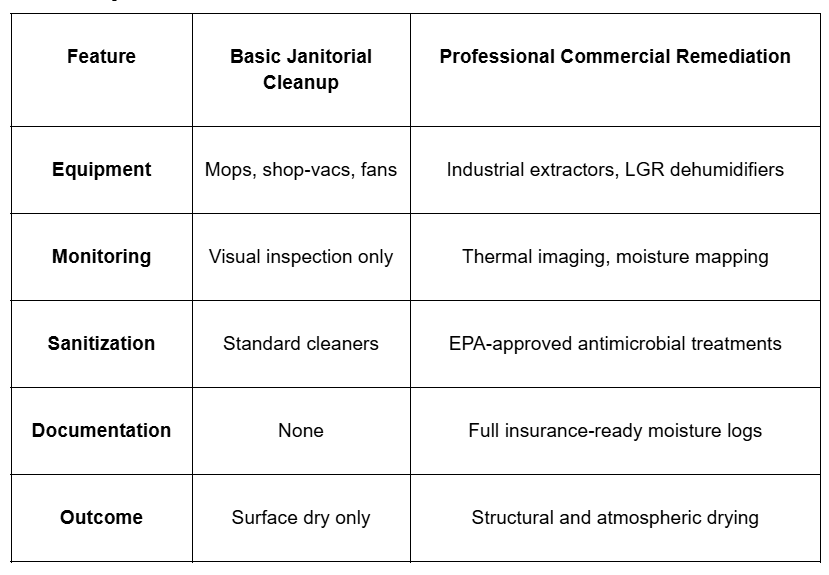
Standard cleaning crews are rarely equipped to handle the legal and safety requirements of a commercial loss. Professional restoration involves strictly following IARC S500 standards, which provide the procedural framework for high quality water damage repair. Using a certified team ensures that your business remains compliant with health codes and that your insurance claim is supported by accurate, data-backed documentation.
For businesses operating in sensitive sectors like healthcare or food service near the Medical Center, sanitization is not optional. The remediation team must use hospital grade disinfectants to eliminate pathogens introduced by the water. This level of precision protects the business from future liability and ensures that employees and customers are returning to a truly safe environment.
Effective cleanup follows a rigid set of priorities to ensure nothing is missed during the chaos of a flood. The steps generally include:
Generally, yes, if the water damage is "sudden and accidental," such as a burst pipe. However, damage resulting from lack of maintenance or long term seepage may be excluded. It is vital to document the source immediately to support your claim.
In many cases, yes. Professionals can often set up "containment zones" using heavy duty plastic sheeting and HEPA air scrubbers to isolate the work area, allowing you to continue operations in unaffected parts of the building.
There are three categories: Category 1 (Clean water), Category 2 (Gray water/chemical or biological contaminants), and Category 3 (Black water/sewage or flood water). The category dictates whether materials can be cleaned or must be discarded entirely.
The only way to prevent mold is to reduce the relative humidity in the space to below 60% within 24 to 48 hours. This requires industrial dehumidification rather than just standard air conditioning or open windows.
Yes, commercial water must often be disposed of according to local environmental guidelines to prevent contaminants from entering the city's storm drains. Professionals ensure all extracted water is handled according to local municipal codes.
Navigating a property crisis requires a balance of speed, technical expertise, and local knowledge. Understanding the commercial water remediation process allows you to act decisively, protecting your investment and your staff from the long term effects of moisture damage. Whether your facility is located near the Renaissance Center, within the bustling suburbs of Royal Oak, or in the industrial hubs of Dearborn, professional intervention is the key to a successful recovery.
When your business faces unexpected water intrusion, you need a partner who understands the local landscape and the unique architectural challenges of our region. Rebuilders Restoration serves as a premier local specialist, providing the advanced technology and rapid response needed to restore your commercial property to its pre-loss condition efficiently and effectively.