Know the property
Document addresses, building use, key contacts, access procedures, utility information and the rooms, systems or inventory that matter most.

Escambia & Santa Rosa counties · Commercial storm response
Keep a storm from becoming an open-ended shutdown. ReBuilders helps Pensacola, Gulf Breeze and Navarre property teams arrange pre-storm response agreements and coordinate water removal, structural drying, temporary protection and recovery after impact.
Call 866-535-0363Request a pre-storm agreement24/7 emergency line. Call for urgent damage or discuss a response agreement before the storm. Mobilization must be confirmed for your property.
Commercial catastrophe response
An Escambia or Santa Rosa County response plan should account for who can reach the property, who holds the keys and who can authorize emergency work. Before a storm, we can review your MSA, affected-building priorities, tenant contacts and the process for activating service. For beach or barrier-island properties, discuss alternate contacts and access restrictions before communications become difficult.
Document addresses, building use, key contacts, access procedures, utility information and the rooms, systems or inventory that matter most.
Review authorization, pricing structure, communication, documentation and how emergency work or later changes will be approved.
Discuss staffing and equipment needs, access and response capacity. Arrival timing and any reserved resources must be expressly confirmed in the agreement.
An inquiry starts a conversation; it does not reserve crews or create a contract. Response timing, resource commitments, pricing and authorization are established in the executed agreement. Want a longer-term facility plan? Explore our Pre-Disaster Plan program.
Emergency mitigation & recovery
The right response starts with the source of water, the materials affected and the way your building operates. We coordinate the work in a practical sequence, with documented conditions and a defined scope.
Extract standing water, identify affected rooms and assemblies, remove unsalvageable materials within the approved scope, and clean the work area. Floodwater and storm-surge losses are evaluated for contamination before the cleanup approach is selected. In a retail center or occupied office, identify affected suites and shared corridors before deciding how extraction, cleaning and access will be sequenced.
Map moisture in walls, floors and other affected materials; select air movement and dehumidification for the building and loss conditions; then monitor progress. Drying decisions follow material readings and the approved recovery plan, not surface appearance alone. For multi-floor losses, map the path of water through ceilings, wall cavities and floor assemblies so apparently dry surfaces do not determine completion.
Assess storm-related openings and coordinate board-up, temporary weather protection and roof tarping where conditions allow. Stabilization priorities focus on limiting additional intrusion and protecting occupied or undamaged areas. For coastal properties, coordinate any temporary protection with safe access, building condition and applicable site restrictions. Confirm availability before mobilization.
Identify furniture, equipment, documents and inventory exposed to water. Coordinate protection, item documentation, cleaning, movement or pack-out as the scope requires. Separate salvage decisions from disposal so ownership can review the condition and available options. Prioritize business records, tenant stock and essential equipment. Identify ownership and agree on documentation before contents leave a suite or unit.
Plan debris removal, detailed cleaning and affected-material removal around the loss conditions. Where suspect materials or microbial concerns are present, identify the need for qualified assessment, containment and a defined remediation scope before work expands. Plan containment, waste handling and cleaning around residents, guests or staff where occupancy continues. Site conditions determine the controls needed.
Move from emergency work to a documented repair plan for finishes, assemblies and building systems. Coordinate scope, qualified trades, permitting and sequencing before reconstruction. Regulated work is reviewed for the applicable licensing and project requirements. Separate emergency mitigation from later repairs. Coordinate qualified trades, permit requirements and owner or association approvals before reconstruction begins.
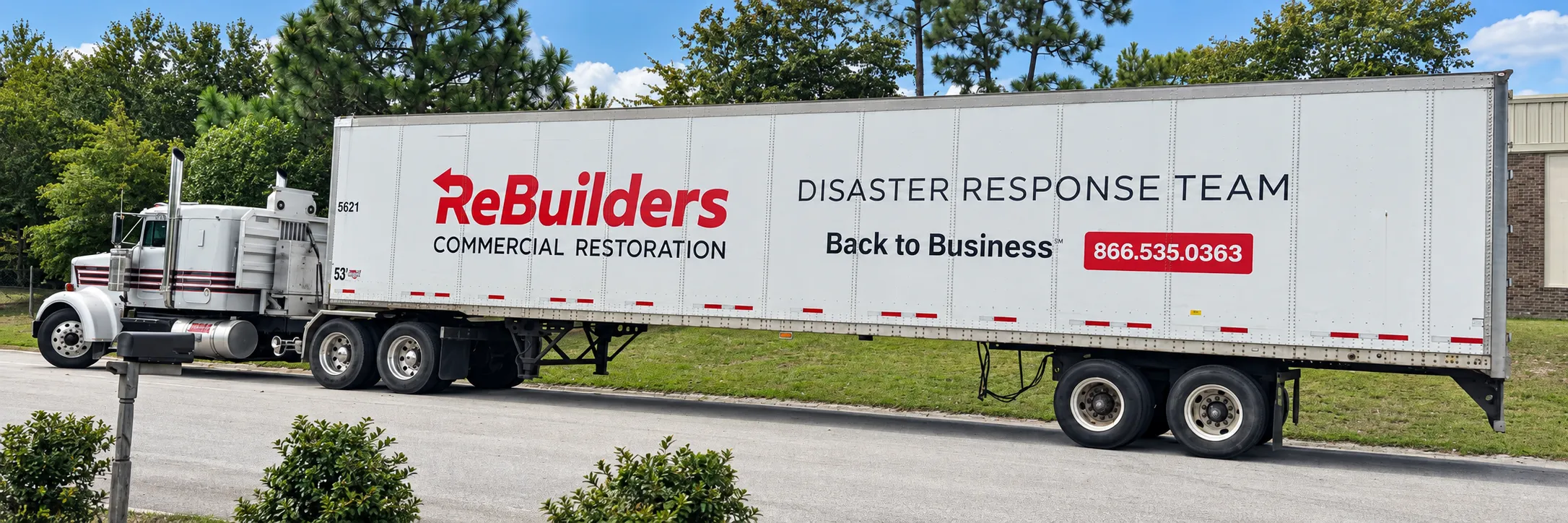
Back to Business™
Review the property, damage, access and critical operations. Confirm the authorized contact, initial scope, response availability and work authorization.
Coordinate extraction, temporary protection, cleaning and drying. Keep photos, moisture readings, work records and scope changes organized by building and affected area.
Review remaining repairs, contents needs and milestones with your team. Coordinate qualified trades and phased reopening where building conditions and approvals allow.
Local property needs
We review commercial response requests across Escambia and Santa Rosa counties, including Pensacola, Pensacola Beach, Gulf Breeze, Navarre, Milton and Pace. The scope follows the property: occupied offices need controlled work areas; associations need clear unit authorization; warehouses need a plan for inventory and loading access.
Offices, retail centers, warehouses, healthcare facilities, schools and multifamily buildings need water-source assessment and a practical sequence for restoring usable space. Identify stock rooms, electrical or mechanical areas and tenant spaces with the greatest business impact, then establish the initial work boundary.
Hospitality and condominium properties may have damage across several floors, common corridors or separate units. Confirm association versus unit-owner responsibility, available keys and resident or guest communications. Building access and safe work areas must be established before moving crews or drying equipment.
Inland buildings can need roof-leak mitigation or flood cleanup even when the most visible damage is near the coast. Share every affected address, building use and approximate size. We review each location independently and coordinate priorities with the owner or facility team.
Commercial focus
Pensacola-area businesses need more than water removal. Retail stock, occupied tenant spaces, resident access and essential services can change the order of work. We establish the authorized contact and immediate operating priorities, then define work areas, communications and milestones suited to the property.
Coordinate offices, shopping centers, apartments, associations and hospitality properties with a defined point of contact. Track affected spaces, work authorizations and tenant communication so the response stays organized.
Identify essential services, restricted areas, occupancy concerns and the facility's own operating protocols. Plan access and work sequencing with the people responsible for the building.
Account for equipment, products, loading access, power and the areas most critical to production. Discuss large-area extraction, drying requirements and safe equipment placement before mobilization.
Set a priority order, confirm the authorized contact at each address, and maintain a separate scope and record for each property. Central coordination helps ownership see what is happening across the loss.
Document the work. Clarify the next step.
Keep the property and claim record organized from the first assessment. For an association or multi-tenant site, identify each affected unit, suite or common area; for a facility, label rooms and building systems consistently. Document the original condition, approved work and changes so the owner and adjuster can follow the recovery.
Send information you already have. Do not delay an urgent call to assemble a complete file.
Talk to ReBuilders: 866-535-0363Questions from property teams
Yes. Request a conversation about an MSA or property-specific response agreement. We review the property, authorized contacts, likely needs, commercial terms and activation process. Any timing or resource commitment must be expressly confirmed in the executed agreement.
Call 866-535-0363 with the property address, safe-access status, type of building and a brief description of the damage. We review current availability and the immediate stabilization needs. Follow emergency officials' directions; do not enter an unsafe or restricted building.
No. You can request emergency services or discuss an MSA without enrolling in a Pre-Disaster Plan. PDP is a separate option for owners who want a more detailed, ongoing facility planning program.
The agreed scope can include condition photos, affected-area records, moisture readings, drying progress, labor and equipment documentation, and approved changes. Share your adjuster's contact and requested documentation with the project team. Coverage and claim decisions remain with the insurer.
Timing depends on the location, safe access, the condition of the building, signed authorization and available crews and equipment. Call for a property-specific assessment. A website inquiry alone is not a dispatch confirmation.
Yes. Identify the association or management contact, access procedures, affected common areas and who can authorize work in individual units. Share occupancy and guest or resident concerns at the start. We coordinate the approved scope and sequencing around those requirements where safe and feasible; a common-area authorization does not automatically authorize work in every unit.
Commercial hurricane and storm response for Pensacola, Gulf Breeze, Navarre and surrounding Escambia and Santa Rosa County properties.